Physical Address
304 North Cardinal St.
Dorchester Center, MA 02124
Physical Address
304 North Cardinal St.
Dorchester Center, MA 02124
Every time I put on my motorcycle helmet, something shifts. The fit tightens, the noise fades, and I’m locked in. With quiet motorcycle helmets, that drop in noise feels almost physical. For a long time, I saw helmets as pure protection. Necessary, but boring.
Then I started paying attention to motorcycle helmet photography.
The more I looked at great helmet photos, the more I realized they’re doing a lot more than showing gear. They reveal how helmets protect us, how they’re designed, and how riders quietly tell their own stories through them—whether they’re wearing full-face lids, half helmet motorcycle helmets, or something in between.
Here’s what I’ve learned.
Good helmet photography doesn’t just show the outside. It hints at what’s happening underneath.
Sharp lighting brings out carbon fibre weaves, vent channels, and shell curves. Side angles show airflow design. Close-ups reveal just how solid the materials really are. Even without words, you can feel why a helmet is built to survive impact and speed.
This matters for everyone, from experienced riders to those shopping for motorcycle helmets for beginners. A single well-lit image can communicate safety and build confidence faster than paragraphs of specs.
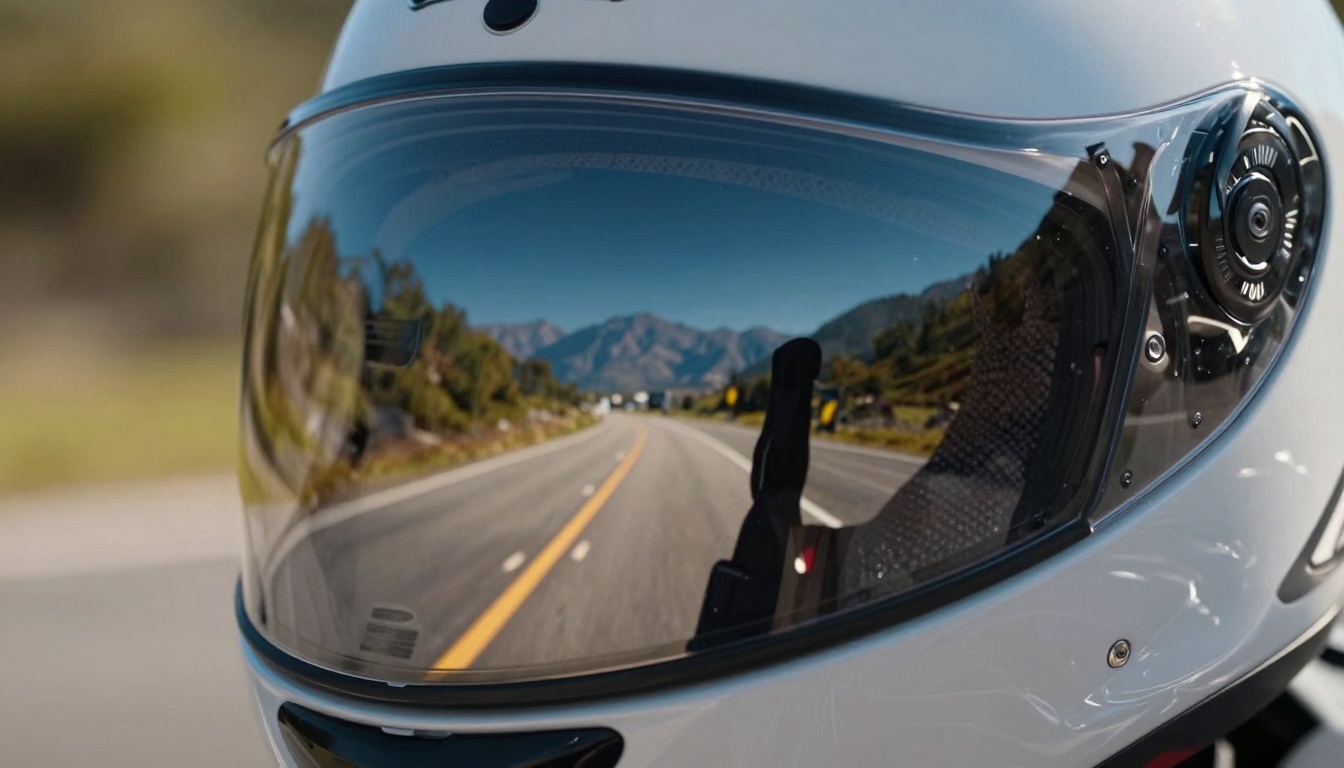
A visor is your view of the world, and photos make that obvious fast.
When lighting is done right, you can see clarity, lack of distortion, and anti-glare coatings instantly. Bad photos make even great visors look foggy. Good ones prove quality without saying a word.
That’s especially true for motorcycle helmets for music and calls, where internal space, visor clarity, and clean lines matter just as much as the tech hidden inside.
Certifications like DOT, ECE, and Snell matter—but most riders don’t read test data.
Photos fix that.
Clear close-ups of certification labels, chin bar locks, and liner details turn abstract safety rules into visible proof. Cutaway images showing EPS liners or MIPS systems make protection feel real, not theoretical.
For riders who need motorcycle helmets for big heads, these images are even more important. Seeing padding depth, shell sizing, and interior shape helps answer fit questions before they turn into returns.
Helmets are personal. Photography makes that obvious.
Reflections in visors show open roads, city lights, or empty highways. Matte finishes feel stealthy. Gloss shells feel aggressive. Racing graphics scream speed. Minimal designs whisper control.
Even without a rider in the frame, the helmet tells you who it belongs to.
That’s what hooked me. Helmet photos aren’t just product shots—they’re lifestyle signals.
Studio photos look clean, but real-world shots feel honest.
A helmet with a bit of dust. Sunlight hitting scuffed edges. Motion blur from a ride. These images tell me the helmet survives real miles, not just display shelves.
I trust those photos more. They feel earned.
Online, photos often rank before text. Image filenames, alt text, angles—all of it matters.
A clear “full-face motorcycle helmet side view” photo answers questions instantly. Add multiple angles or 360° views, and suddenly buying online feels safer.
From what I’ve seen, good visuals don’t just support content—they are the content.
Motorcycle helmet photography changed how I look at helmets completely.
It shows protection without lectures. Design without hype. Identity without faces. When done right, a single image can explain safety, style, and purpose in seconds.
Next time you grab your helmet—or your camera—slow down and really look at it. There’s more story there than you think.
And once you see it, you can’t unsee it.